

Ben Harding is Country Leader for the UK and Transformation, Strategy & Culture Leader for Mobile Water & Integrated Services Europe at Veolia. With over 25 years of industry experience, he is currently leading a strategic review of technical training capabilities across Europe, with a particular focus on the life sciences sector. In this article, Ben shares his vision for how hands-on, experiential learning is transforming capability development and driving operational excellence in an industry where technical competence directly impacts product quality and patient safety.
In life sciences water treatment, where system reliability directly impacts product quality and patient safety, technical capability isn't just an advantage - it's a necessity. Through my work reviewing technical training capabilities across Europe, I've seen firsthand how the right training approach can transform operational performance. At the heart of this effort is our Life Science Centre of Excellence, a facility designed to bridge the gap between theoretical knowledge and real-world operational competence.
The challenge is clear: we must ensure our training capabilities meet the evolving needs of our customers and the increasingly complex regulatory environment they navigate. This means going beyond traditional approaches to create something fundamentally different.
Creating Problem Solvers, Not Just System Operators
Our vision for the Life Science Centre of Excellence goes beyond traditional training. We're not simply teaching people how systems work, rather, we're building problem solvers who can anticipate challenges, optimise performance all while driving continuous improvement. Every participant should leave not just with knowledge, but with the confidence and competence to improve their customers' water treatment operations immediately.
This approach addresses three critical gaps we've identified in the industry: the retirement of experienced professionals taking institutional knowledge with them, increasingly complex regulatory requirements, and rapid technological advancement. The Centre allows us to capture and share expert knowledge through structured training, integrating compliance into every module and providing cutting-edge facilities that reflect the latest technologies.
Hands-On Learning as the Foundation
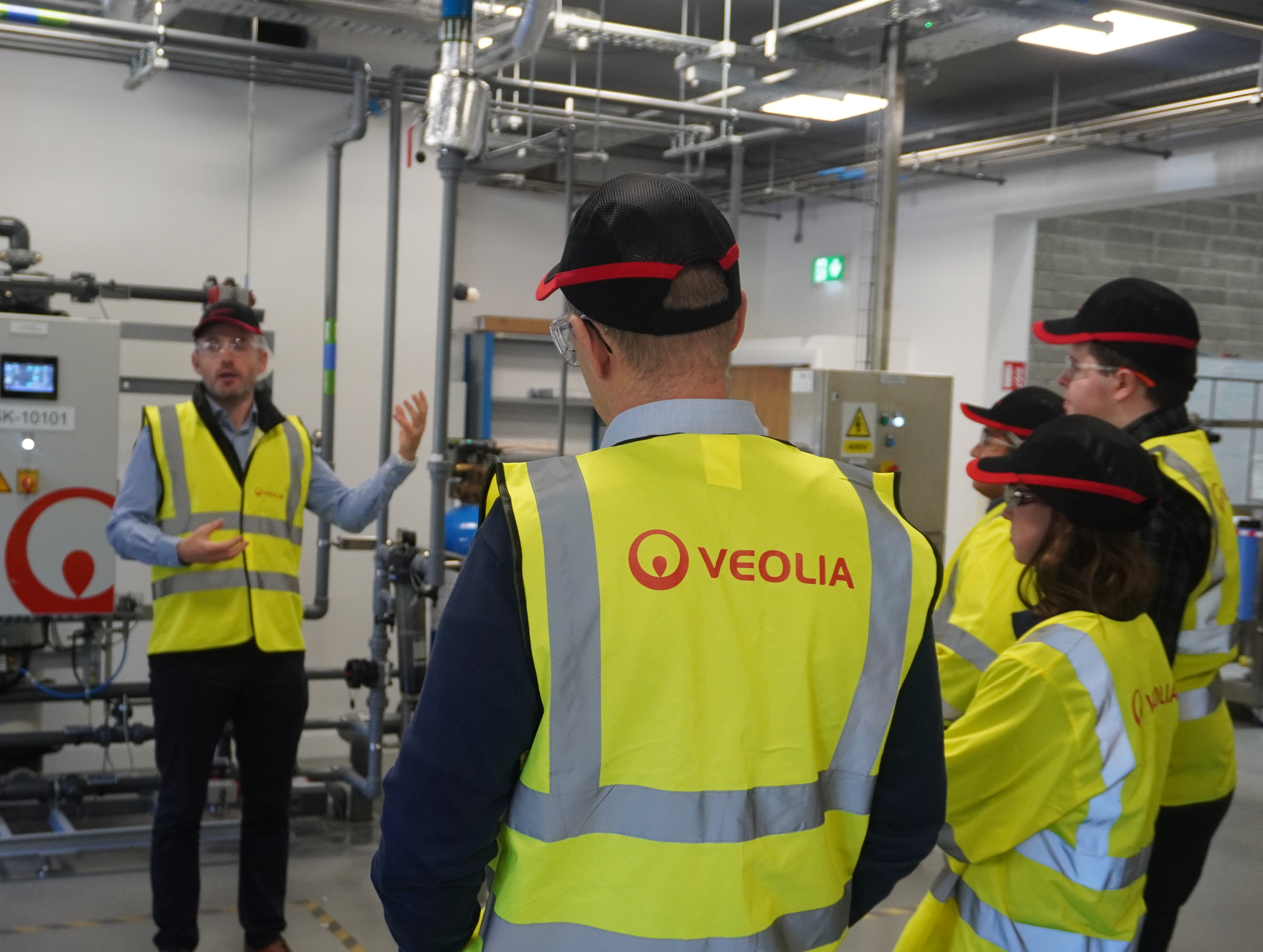
Traditional classroom-based training often creates a disconnect between learning and doing. We've flipped that model by making hands-on experience the foundation, not the afterthought. Our facility features full-scale operational systems where participants engage in realistic scenarios - troubleshooting actual issues, performing maintenance procedures and making operational decisions in real-time. Theory runs throughout, but the learning is anchored in practice. This approach dramatically improves both retention and application.
But why is this experiential approach so critical? Water treatment systems are dynamic, interconnected and unforgiving of errors in life sciences applications. You can't truly understand system behaviour, recognise early warning signs, or develop troubleshooting instincts from a manual or presentation alone. Hands-on learning helps participants understand what normal looks like, sounds like, even feels like. When something goes wrong on a customer site, that hands-on foundation enables faster, more confident responses.
In an industry where water quality directly impacts product quality and patient safety, this capability is non-negotiable.
Three Factors That Drive Impact
So, what makes the learning experience at the Centre particularly impactful for engineers, operators, and technical teams? Three factors in particular stand out:
Relevance: Every exercise mirrors real-world challenges our participants face daily. We deliberately design scenarios that introduce the complexity of real operations - not just the 'easy path' of how systems should work, but troubleshooting, root cause analysis and decision-making under realistic constraints.
Immersion: The immersive environment, working with actual equipment under realistic conditions, helps build intuition that classroom learning simply cannot replicate. We also incorporate case studies from real industry incidents, helping participants connect theoretical principles to tangible outcomes and consequences.
Peer Learning: Our cohort-based approach builds a community of professionals from different teams and countries, fostering knowledge exchange and networking that extends well beyond the training itself.
Building Long-Term Capability
The Centre's impact extends beyond understanding specific systems. We focus on developing core competencies: critical thinking, troubleshooting methodologies and continuous improvement mindsets. While participants train on specific technologies, the underlying principles and approaches apply broadly.
We offer progressive learning pathways, from foundational to advanced and specialist levels, as well as growing train-the-trainer programmes that help build internal capability. Our goal is to create self-sufficient teams that can adapt as technologies and requirements evolve.
In fact, our customers have reported measurable improvements across multiple areas:
- Reduced unplanned downtime through better preventive maintenance and faster issue resolution.
- Enhanced operational efficiency from optimised system performance.
- Increased confidence in teams' ability to handle complex situations independently, reducing reliance on external support and accelerating response times.
Preparing for the Future
Looking ahead, several competencies will be essential for professionals in life sciences water treatment over the next 5-10 years:
Digital literacy will be paramount - understanding data analytics, predictive maintenance patterns and automated control systems. Sustainability expertise is increasingly critical as organisations balance water quality requirements with environmental responsibility. Finally, the pace of technological and regulatory change means continuous learning is no longer optional; it's a core competency.
Elevating Industry Standards
The Life Science Centre of Excellence serves a dual purpose: as a training centre and as a customer and industry-facing showroom for key technologies in the life sciences sector. We're actively involved in industry working groups and standards development, ensuring our training reflects and influences best practices.
We collaborate with customers, integrators and industry associations to stay ahead of emerging requirements. By training professionals from across the sector, we're creating a common language and shared baseline of competency that elevates the entire industry. Through thought leadership, technical forums, and industry knowledge sharing, our impact extends well beyond our training rooms.
Training as Strategic Investment
If there's one message I want readers to take away, it's this: training is not a cost - it's a strategic investment in operational excellence, risk mitigation and competitive advantage. In life sciences water treatment, where the stakes involve product quality, patient safety and regulatory compliance, the question isn't whether you can afford to invest in training. It's whether you can afford not to.
The most successful organisations recognise that their people are their most valuable asset, and developing their capabilities delivers returns that far exceed the investment. At the Life Science Centre of Excellence, we're committed to making that investment as impactful as possible - building the technical capability that drives reliability, compliance, and operational excellence across the life sciences water treatment sector.