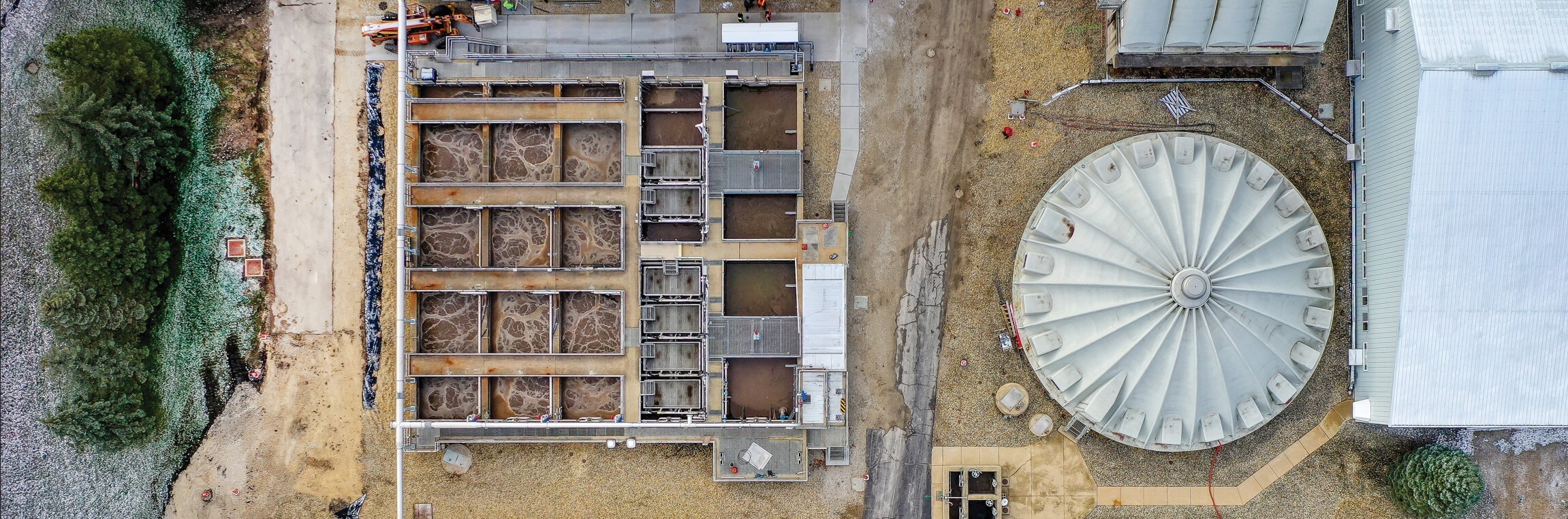


Wastewater utilities are under increasing pressure. Population growth, increasing loads to existing wastewater treatment infrastructures, and ever more stringent environmental and sustainability regulations (e.g., EU Directive 2024/3019), alongside demands for energy neutrality and Greenhouse gas (GHG) mitigation, are some of the significant issues the industry is facing.
The core challenge is how you can increase the biological treatment capacity of your plant without expanding your operational footprint, carbon footprint, and energy use.
Why biological intensification matters
Conventionally, when plants needed more capacity, the answer was to build more bioreactor tanks or increase the mixed liquor suspended solids (MLSS) concentration. Both approaches have significant limitations. Building new tanks requires major capital investment, takes time, and increases the carbon footprint. On the other hand, increasing MLSS generates a higher solid load to the final settlers, which affects the hydraulic capacity of the plant. It also drastically reduces oxygen transfer efficiency, driving up energy demand.
Biological intensification takes a smarter approach. By upgrading the biological stage with advanced microbial processes, it enables existing plants to handle higher loads, improve nutrient removal, and operate efficiently within their current physical footprint.
A simple upgrade with zero downtime: ZeeLung* MABR
Among the most proven technologies enabling this shift is the ZeeLung Membrane-Aerated Biofilm Reactor (MABR). For plant operators and management, the biggest advantage is simplicity: ZeeLung cassettes are installed directly into existing tanks, meaning there is no need for structural modifications and no interruption to the existing plant operations.
How it works?
ZeeLung MABR offers highly efficient process intensification through four key steps: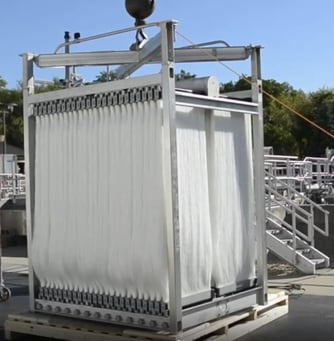
-
Immersed in existing tanks: ZeeLung cassettes are immersed directly into the mixed liquor of your existing bioreactors.
-
Supporting biofilm growth: The ZeeLung media supports the growth of a biofilm that increases the inventory of nutrient-removing biomass in the system without increasing the overall mixed liquor concentration.
-
Breathing without bubbles: The ZeeLung media “breathes”—transferring oxygen to the biofilm by means of molecular diffusion at very high efficiency without the use of bubbles which can reduce aeration energy by up to four times.
-
Counter-diffusional biofilm: Pollutants enter the biofilm from the bulk liquid side, while oxygen diffuses from the membrane side. Because ammonia molecules are smaller than organic molecules, they penetrate faster to the oxygen-rich inner layer. This counter-diffusional biofilm naturally favors the growth of nitrifying bacteria, creating a highly robust environment for nitrification.
Key benefits
With ZeeLung, up to 50% more treatment capacity can be achieved within the same tank volume. Bubble-free aeration delivers a 4X reduction in energy consumption while cutting GHG and N₂O emissions.
🔷Higher treatment capacity without new civil works
🔷Significantly reduced energy consumption: Molecular diffusion of oxygen and enablement of nitrification at a shorter sludge age results in up to 75% aeration energy savings and possible increase in the biogas potential of biosolids
🔷Lower operational costs through reduced electricity demand
🔷GHG and N₂O emission reductions supporting carbon-neutrality goals
🔷Resilient performance during load variations and changing wastewater characteristics
🔷Low-risk implementation with fast deployment and no operational disruption
Taking capacity further with zeeDENSE*
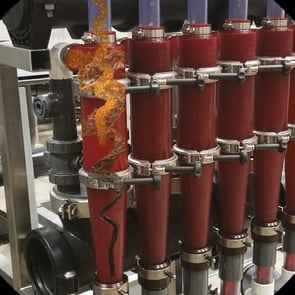 For plants requiring super-intensification, ZeeLung MABR can be paired with the zeeDENSE densification rack. This combination utilizes continuous-flow densification technology to maximize the performance of both the bioreactor and the secondary clarifier. By using hydrocyclones to separate dense and light particle fractions, the zeeDENSE rack selectively wastes the light biomass and retains the dense, well-settling biomass. This improves sludge settleability, increases the hydraulic capacity of the clarifiers, and enhances biological phosphorus removal.
Case Study: Super-Intensification at Bolton Wastewater Treatment Plant
The power of combining these technologies is clearly demonstrated at the Bolton Wastewater Treatment Works in the UK, which serves a population equivalent of approximately 446,000.
Facing a strict new effluent ammonia limit of 2 mg/L, the existing 151 MLD conventional activated sludge plant needed a 15% capacity expansion and augmented nitrification capabilities.
Rather than building costly new infrastructure, the utility chose a biological intensification route. ZeeLung cassettes were installed in the existing bioreactors to augment nitrification capacity and ensure compliance. Simultaneously, zeeDENSE densification was implemented to improve solids settling and increase the clarifiers' capacity.
The result? A 15% capacity expansion and stable, improved ammonia performance—achieved entirely within the existing footprint and delivered in a short timeframe while the plant continued to operate.
Are you interested in more details about the largest MABR installation worldwide? Get the Bolton Case Study here.
A future-proof strategy for European utilities
As Europe accelerates toward climate-neutral water operations, technologies that simultaneously increase capacity and reduce energy use are imperative. Biological intensification is no longer an emerging concept – it is a practical, proven approach. With ZeeLung MABR and zeeDENSE, you can modernise your activated sludge plant in a way that is both economically and environmentally sustainable, offering a simple strategy to meet current and future regulatory requirements.
Are you ready to upgrade your plant?
Contact us for a free technical assessment of your facility and hear how Veolia can ensure your compliance with the new Urban Wastewater Treatment Directive requirements.

*Trademark of Veolia; may be registered in one or more countries.